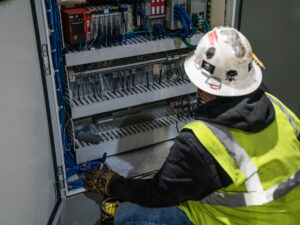
Maintenance Teams Under Pressure
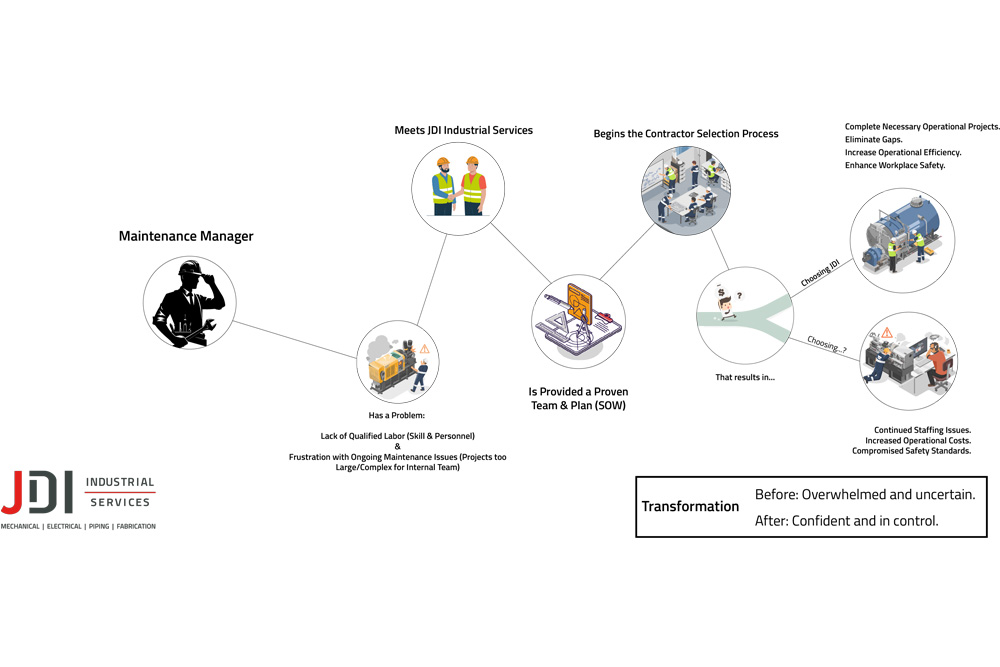
The maintenance manager journey is under more pressure than ever before.
They’re in control of a huge facility with a million things to do. Sometimes it looks like they’re Santa Claus, double-checking the list twice to see what problems are naughty or nice.
Equipment needs to run smoothly; preventive maintenance must continue; major improvement projects are still required; and expected delivery to operations on a silver platter.
Additionally, their maintenance teams are expected to meet those demands too, without complaint.
The main source of this pressure?
Specialized labor shortages, budget constraints, and uncertainty around large, complex projects.
Even though these are separate problems, they often make each other worse.
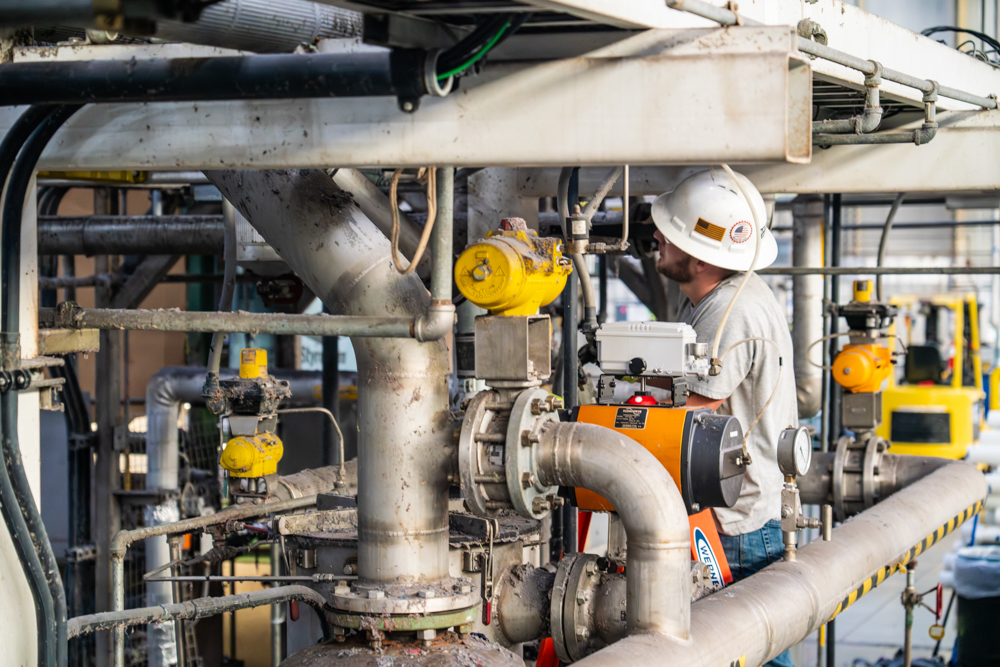
Increasing Labor Shortages
A shortage of skilled maintenance workers is an ongoing problem in the industrial sector. As of February 21st, 2025, The Manufacturing Institute reported that “the U.S. faces a shortfall of 1.9 million workers by 2033; 3.8 million positions will open up, but nearly half could go unfilled.”
The need for skilled labor continues to grow, but that support may not come from new hires anytime soon.
When maintenance teams are asked to do more without additional support, the impact can show up in several ways:
- Preventive maintenance schedules may fall behind.
- Emergency response times may increase.
- Overtime may rise as teams set routine work aside to address urgent issues.
As a result, managers are often pushed into a corner and forced to ask:
What can wait? And what needs immediate attention?
Consequently, this creates a harmful cycle that is hard to escape.
Delaying maintenance can cause significant problems, and an overloaded team has less time to stop the cycle. Maintenance needs that time to identify and fix the root cause of equipment errors and failures.
So, what can a maintenance manager do when hiring more people is out of the question?
There are two options: find a way to help their current team do more without sacrificing productivity or hire an external contractor to help out.
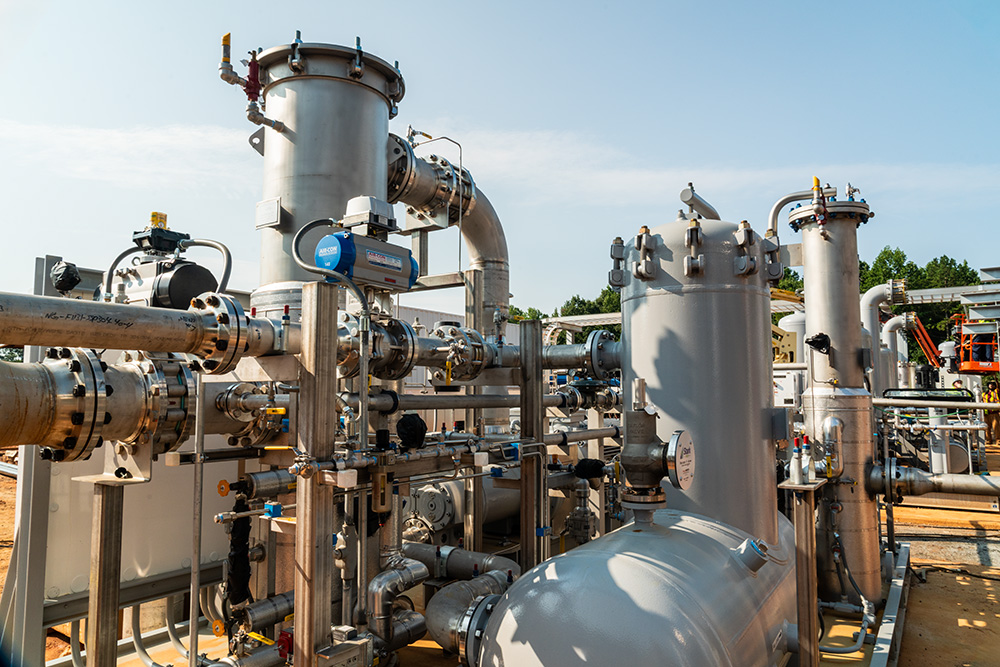
Big Projects Create Uncertainty
A fully booked maintenance schedule becomes even harder to manage when a major project enters the pipeline.
Projects like equipment installations, facility upgrades, and system replacements often require:
- Specialized skills
- Careful coordination
- Enough manpower to keep routine maintenance on track
Then a difficult question arises: Can your team realistically take on this project without falling behind?
When a busy team takes on a complex project, it can lead to delays, more overtime, quality issues, and clashes with regular maintenance duties.
A complex project, such as installing a chiller system or replacing process piping, could overwhelm or confuse internal staff. A time-consuming project, like installing 38 steam traps, can take an internal team weeks or months to complete.
However, uncertainty can become an opportunity, as shown in PMI’s research paper on exploring project uncertainties and value opportunities.
The researchers reviewed 20 cases involving uncertainty related to complex projects and found that mindset was a huge factor between the two categories. The mindset associated with who oversaw the project, decided whether it was an opportunity or a risk. Risk is frequently cited as uncertainty (Lechler, T., Gao, T., Keeney, D., & Edington, B. H. (2012).
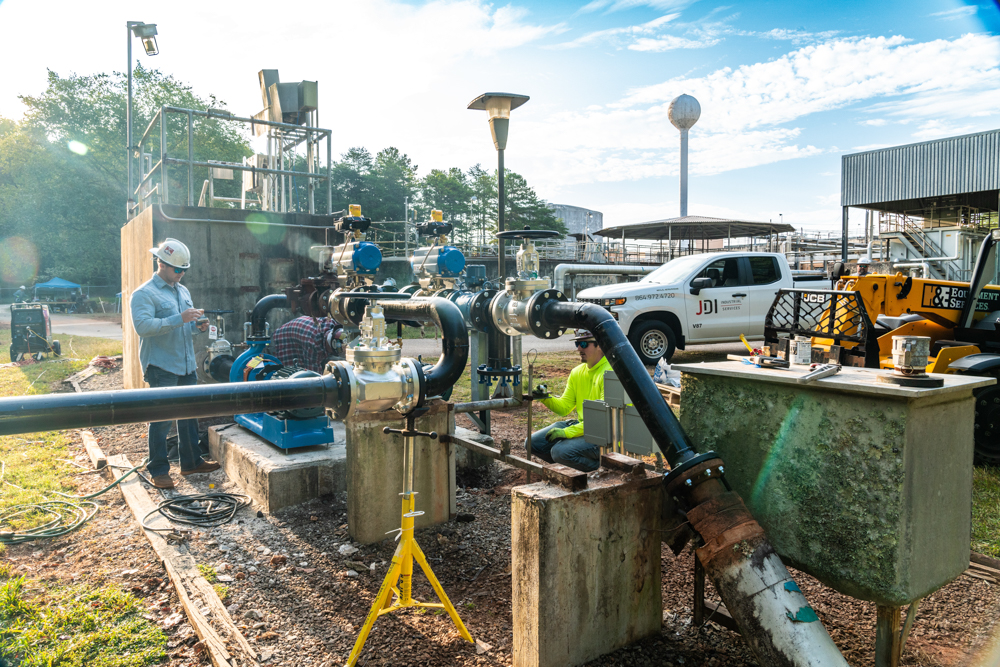
Building Capacity Without Overloading the Team
The best approach is to use available resources more strategically to build capacity. Start by identifying your team’s strengths and weaknesses with a few questions:
- Who on your team is available to take on extra work?
- Which person handles stress the best?
- Who is the least experienced?
- Who handles shifting between tasks the best?
However, when resources are stretched too thin, it doesn’t make sense to build internal capacity. The risk starts outweighing the benefits.
When that happens, it is time to call for outside help.
A mechanical contractor, such as JDI, can add capacity and support your maintenance manager journey. We perform specialized installations, commissioning, project management, and other complex work.
Business Insider recently published an industry analysis from JDI Industrial Services that found mechanical commissioning before startup can save, “a median whole-building energy savings of 13% with a median payback period of 4.2 years.”
An industrial contractor specializing in mechanical applications can meet the need for skilled labor, cut project time in half, save clients’ money, and reduce associated risk for large, complex projects.
When external support is brought in, it’s important to set clear expectations before work begins:
- Define project scope
- Assign clear ownership for each task.
- Establish communication expectations
- Plan how internal teams and outside resources will work together.
This approach helps each team keep on track to finish daily tasks and make progress on big projects together.
External resources do not have to replace the maintenance team.
Instead, they can provide targeted support when the workload increases or when the job’s associated risk outweighs the benefits of handling it internally.
Turning Pressure into a More Durable Operation
Increasingly dramatic labor shortages and looming risky projects are not problems that can be easily solved overnight by anybody.
Maintenance managers can, however, change how their teams respond to these challenges.
The goal is not just to make maintenance teams work harder, but to give them the tools and support they need to work more effectively.
This balance can help keep important maintenance projects on schedule and give industrial facilities the confidence they need to take on larger projects.
Cited Sources:
Lechler, T., Gao, T., Keeney, D., & Edington, B. H. (2012). Exploring contextual conditions of project uncertainties and project value opportunities. Paper presented at PMI® Research and Education Conference, Limerick, Munster, Ireland. Newtown Square, PA: Project Management Institute.
The State of the Manufacturing Workforce in 2025. (2025, February 21). NAM News Room. https://themanufacturinginstitute.org/the-state-of-the-manufacturing-workforce-in-2025-20621/?stream=workforce-news
JDI Releases Analysis on the Impact of Mechanical Commissioning on Energy Efficiency and Project Costs. (2026, August 11). Business Insider. https://markets.businessinsider.com/news/currencies/jdi-releases-analysis-on-the-impact-of-mechanical-commissioning-on-energy-efficiency-and-project-costs-1036439701