
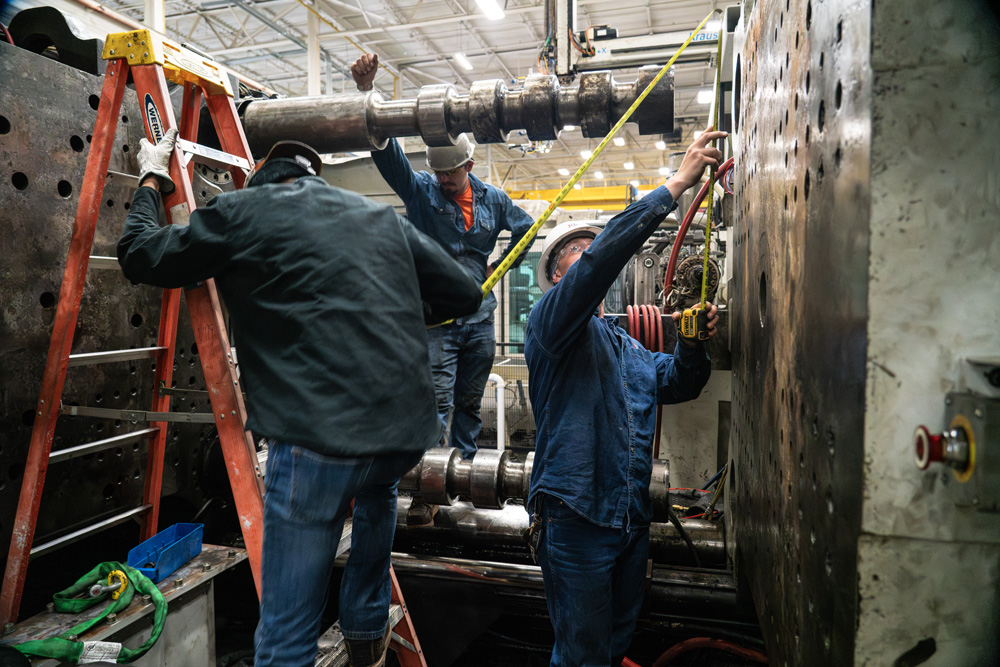
Millwrights Aligning Frame
Millwright Alignment at Techniplas
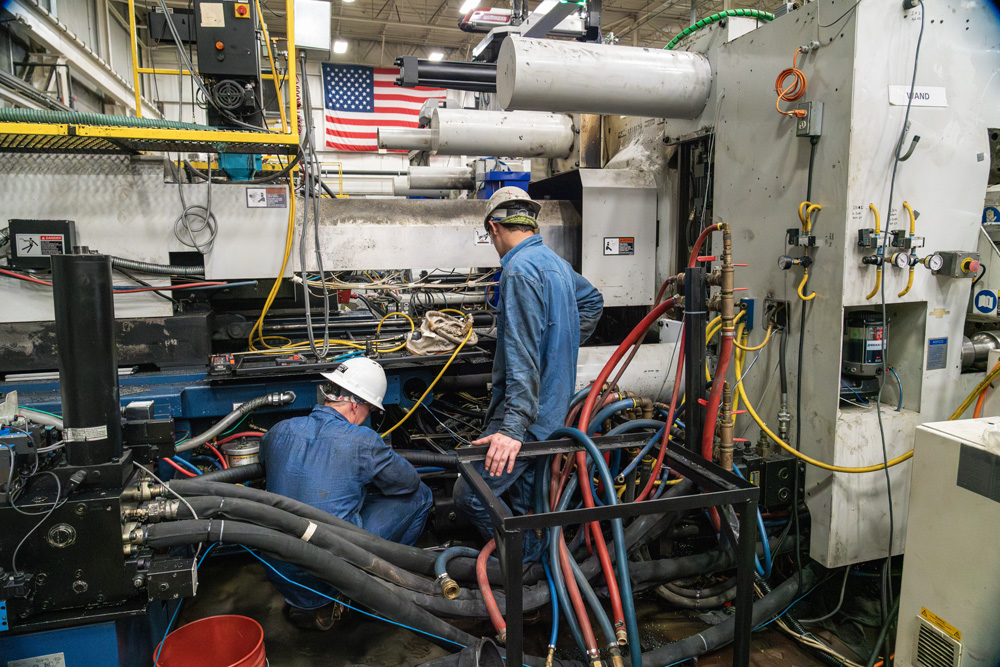
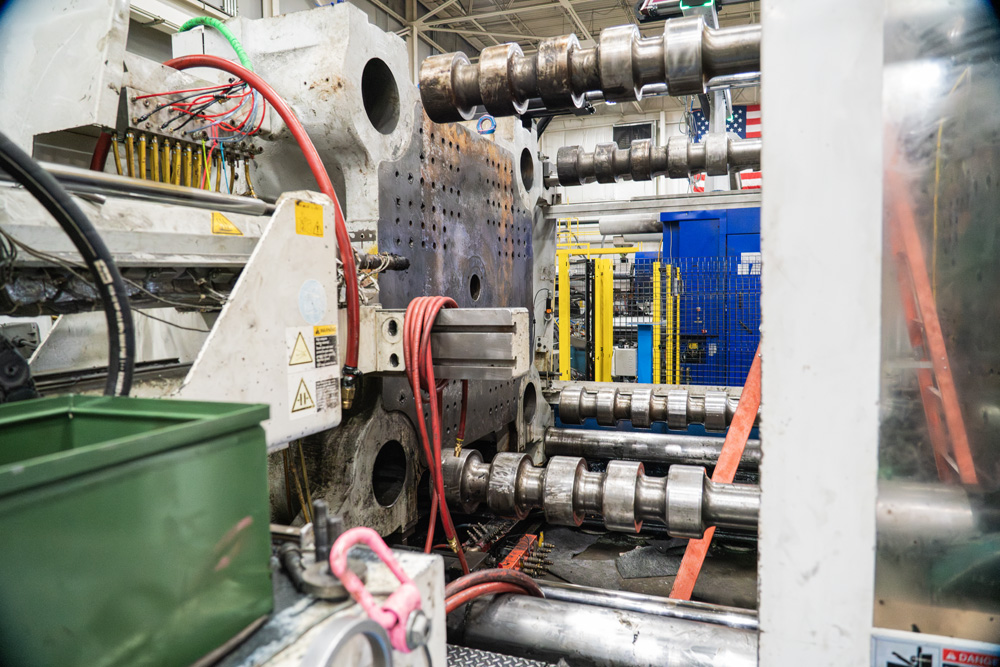
Injection Mold Alignment - Project Overview
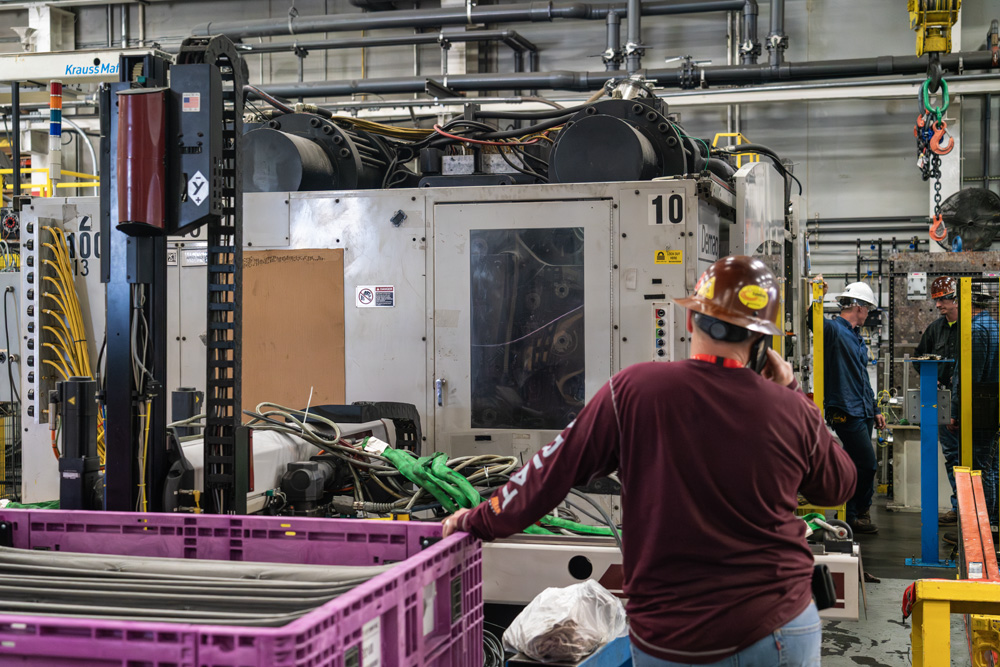
JDI’s project for Techniplas in South Carolina is about optimizing and ensuring a continual operation at their manufacturing facility. Our millwrights receive a call that the facility is experiencing two major issues.
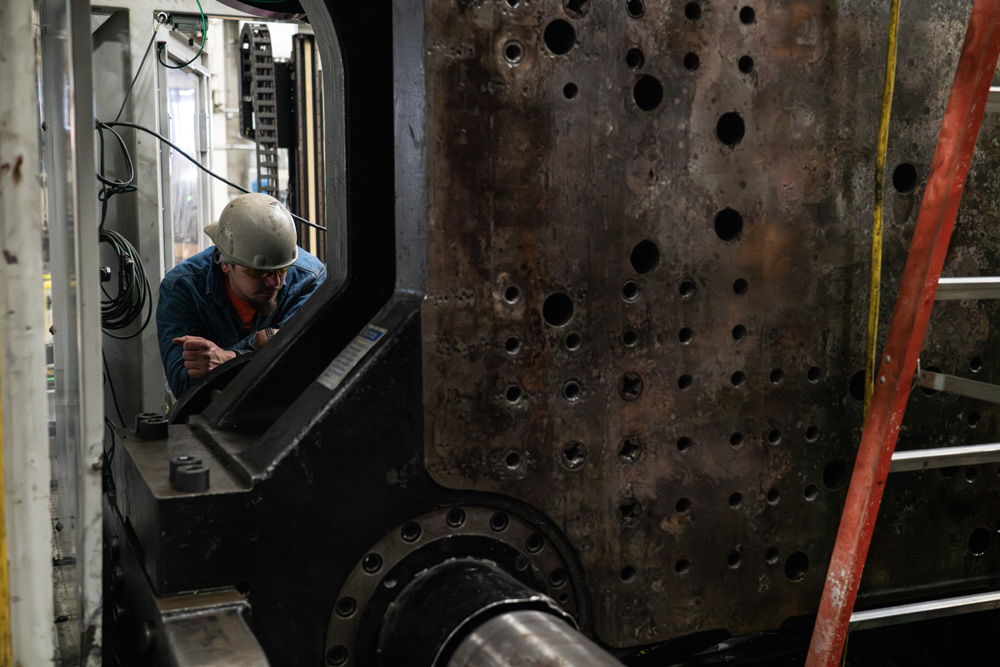
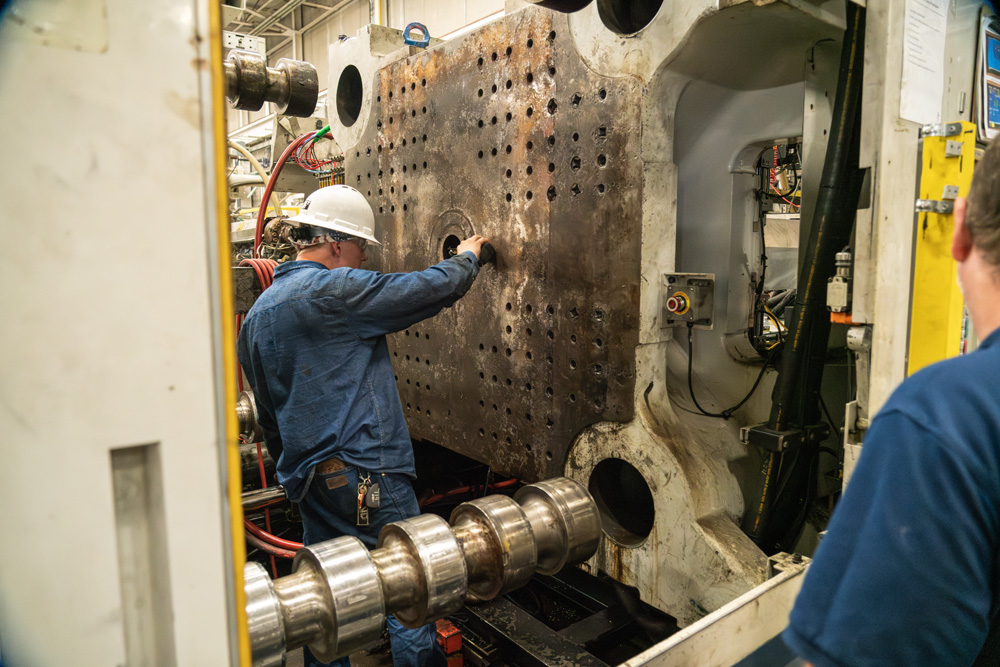
Previously, the facility ran a production that involves an operational error that throws off the entire alignment. The platens, which should be lining up with extremely tight tolerances, is hitting itself.
The second issue we find in our discovery is that the machine has never been in true alignment since it was first installed in 2005. We love the challenge of getting a machine to be in the right place, and we do so for the Techniplas team in a very small window. Ultimately, this millwright alignment project gets the facility on-track, back to safer standards, and updated accuracy.
To see more details about JDI’s performance, keep reading below.
Aligning the Frame
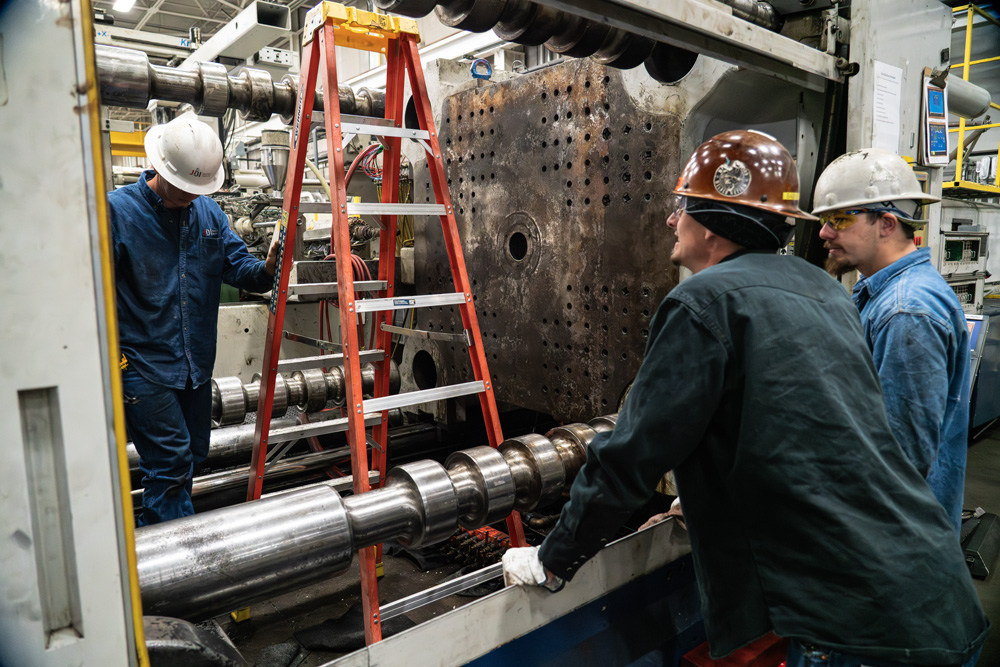
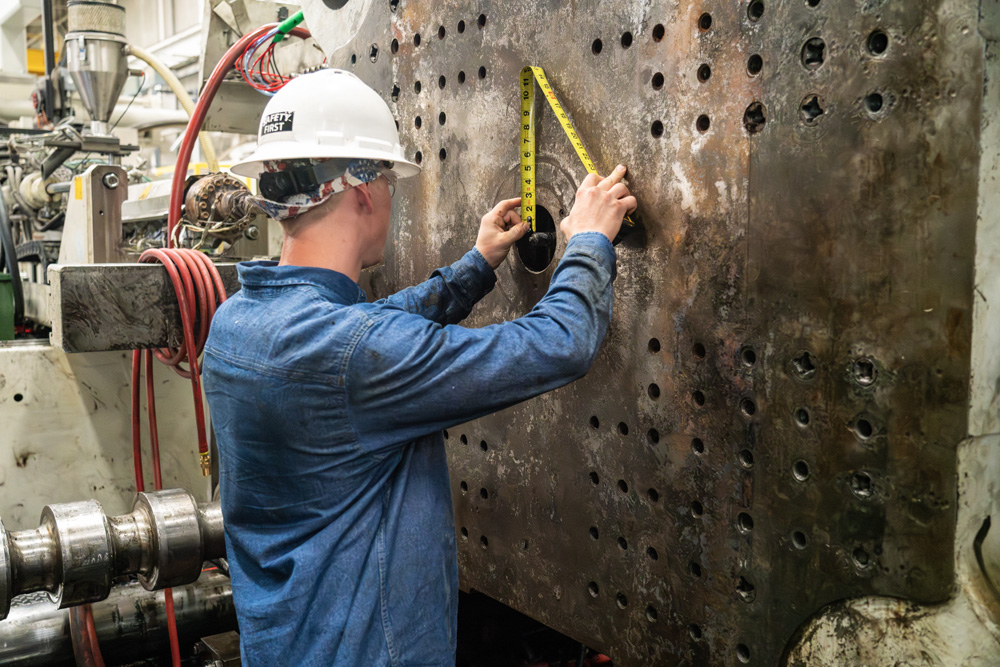
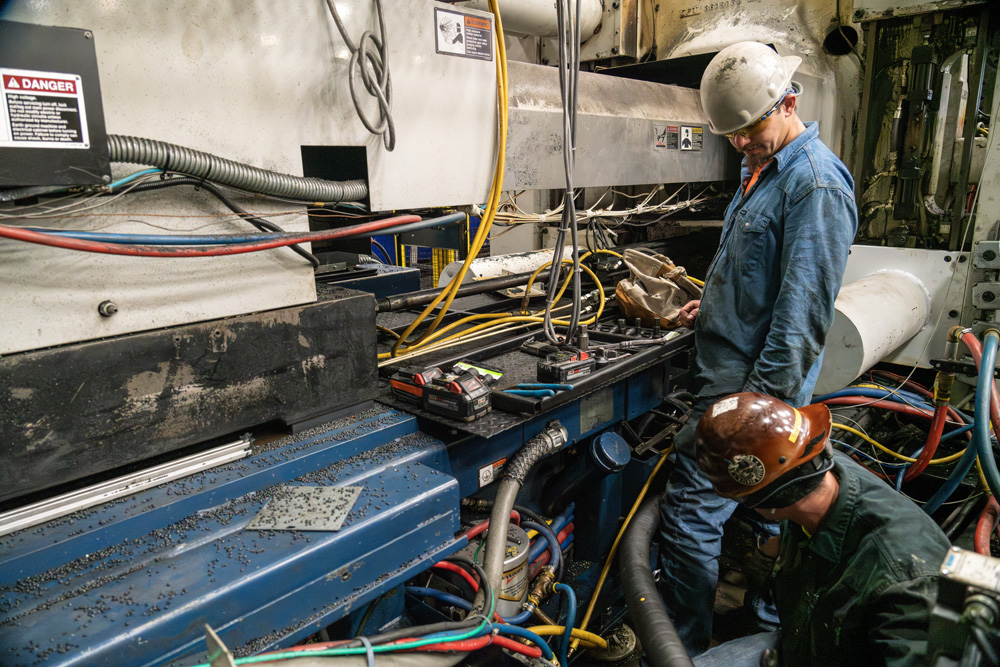
Initially, the JDI millwright team begins with measuring and calculating the machine’s alignment. Since each machine has particular calculations, we actually began this project by researching the Sumitomo manual. Doing this, we find that the machine’s x-axis and y-axis are off by quite a lot.
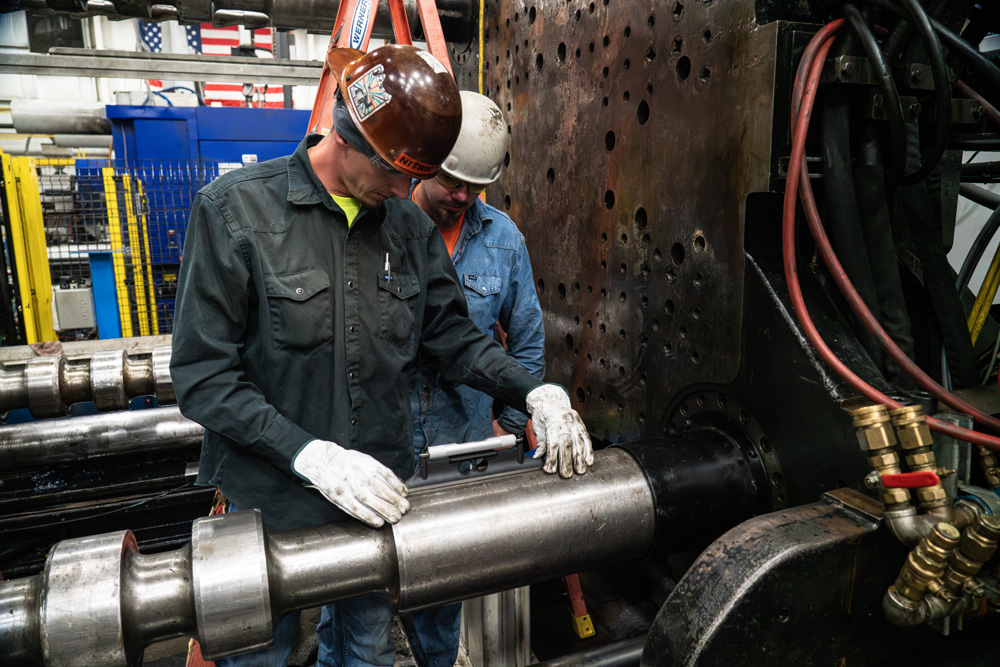
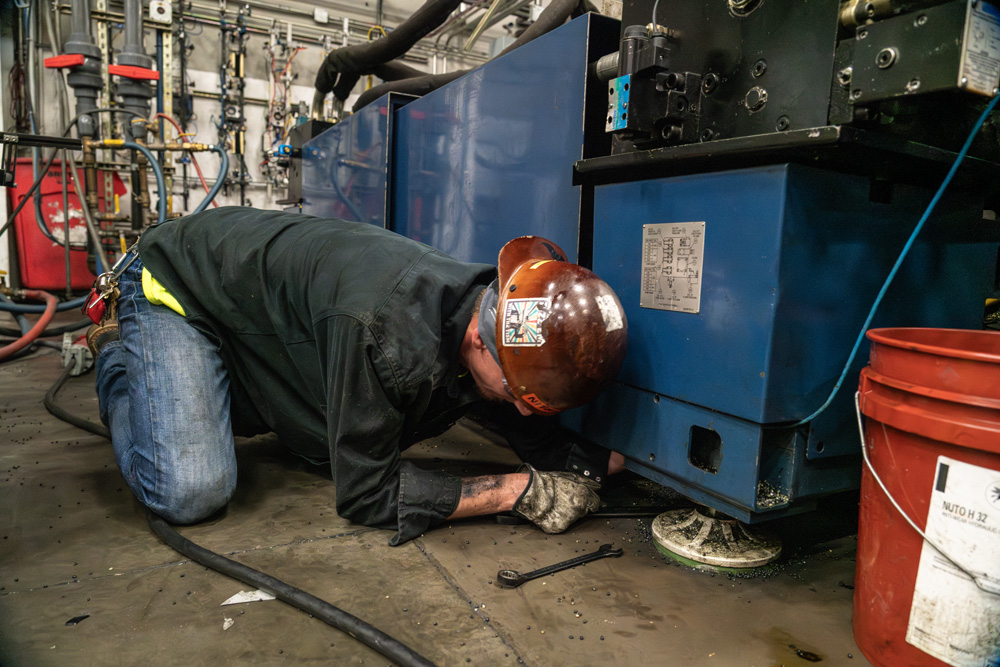
The millwrights level out the axes of the machine, getting its frame to its required specifications. Using our precision level, we test the axis again after levelling the feet of the machine and ensure it’s precisely aligned.
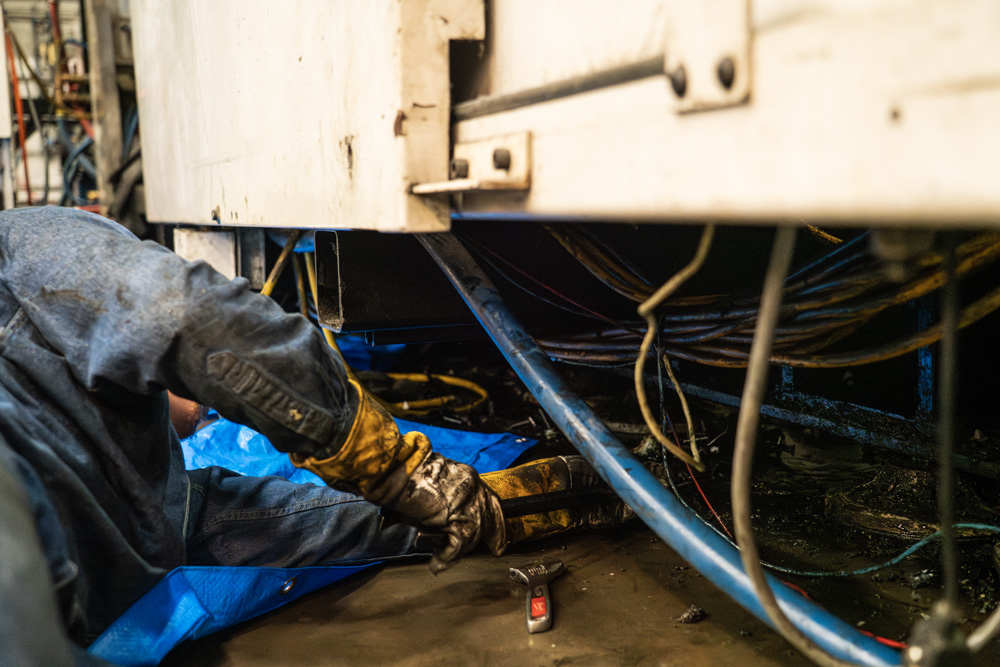
To finish the alignment, we also use a torque wrench to make sure not to apply too much pressure as not to cause twist. Next, we will begin to figure out the alignment of the machine unto itself.
Precise Platen Alignment
Within this next phase, we begin by placing the precision level across the machine bed at the fixed platen end. Next, our millwrights adjust the leveling feet until the bubble is centered. We then repeat this step with the moving platen end. The goal is to match these readings to ensure no “twist” exists between the two ends.
Longitudinal leveling takes place with positioning the level along the length of the machine bed. The millwrights adjust the feet to bring the entire length into level. Thereafter, we verify the twist by moving the level to the center of the bed.
After leveling, JDI’s millwrights verify that the clamp tonnage is distributed evenly across all four tie bars. We then make sure the injection unit is also level and aligned with the center of the fixed platen for accurate touch.
Slide the shim between the base and the stand (making sure it fits around the bolt and is secure. When completed, the last task is to remove both the pry and the block and retighten the front bolts again with a torque wrench. Now, the machine is in its correct alignment.
Results
Techniplas loves JDI Industrial’s ability at providing this millwright alignment within a limited shutdown period.
They also provide feedback, saying that the JDI millwright department did something no other contractor ever could. We are able to get the machine as close to Sumitomo’s recommended specifications as possible, which prevents misalignment, incidents, and even accidents.
With JDI, Techniplas can count on our safety record and expertise to positively impact their own.
Connect With Our Team
Let’s Get Your Project Started
Reach out to our team to get a quote or start the conversation on your next project. We are dedicated to finding the best solution for your industrial needs.