In the world of industry, maintenance is a critical factor. In the past year, large industrial facilities have lost more than a day’s worth of production each month and hundreds of millions of dollars a year to machine failures, according to a new report published in June by Senseye, the AI-powered machine health management company.
“Money furnaces,” is how Tesla CEO Elon Musk described idle facilities in a 2022 quarterly earnings call.
Industrial maintenance helps keep operations safe, efficient, and productive. Every asset, from large-scale machinery to process equipment, requires routine care to perform reliably. Regular inspections help catch potential issues early, keeping equipment reliable and minimizing unexpected downtime.
In this guide, we’ll explore the fundamentals of industrial maintenance, including key strategies, essential definitions, common problems, long-term costs, and tips for finding a trusted maintenance company.
Understanding the Job
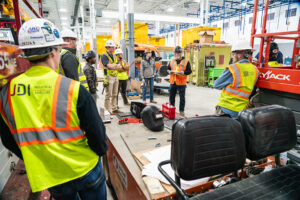
JDI Industrial Services specializes in maintaining, installing, and repairing machinery, safety, piping, and electrical services items. We provide comprehensive maintenance services across key areas of industrial infrastructure.
Our industrial maintenance contractors and repair team help keep your facility running safely and efficiently. When outages, urgent repairs, or unplanned maintenance demands arise, JDI is ready to respond with dependable support.
Maintenance Services
Our industrial mechanics and technicians provide a multitude of services tailored to industrial requirements. These include preventive maintenance, which minimizes unexpected breakdowns, ensuring consistent production.
Additionally, we handle emergency repairs, swiftly addressing any issues that arise unexpectedly. This responsiveness reduces operational disruptions and maintains workflow continuity. Other services include equipment audits and modernization, all aimed at improving performance and efficiency.
We also provide upgrades to maintenance systems to help you detect arising issues long before they reach total failure.
JDI takes collaborating with production and operations teams seriously. Whether you need a task-based or crew-based solution, we’ll customize a plan for your needs and keep your production on track. We specialize in the following four subcategories.
Electrical – Testing, repairing, and replacing electrical systems, machinery, and equipment for industrial facilities.
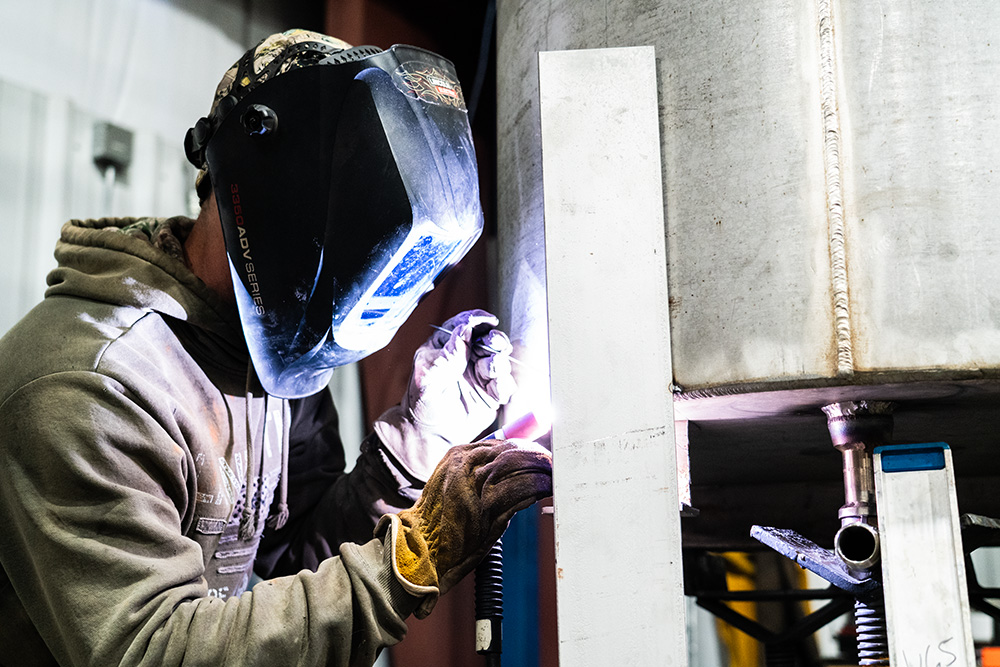
Steel Fabrication – Fabricating, repairing, and replacing steel for structures, plates, guardrails, machine rails, bollards, and safety features.
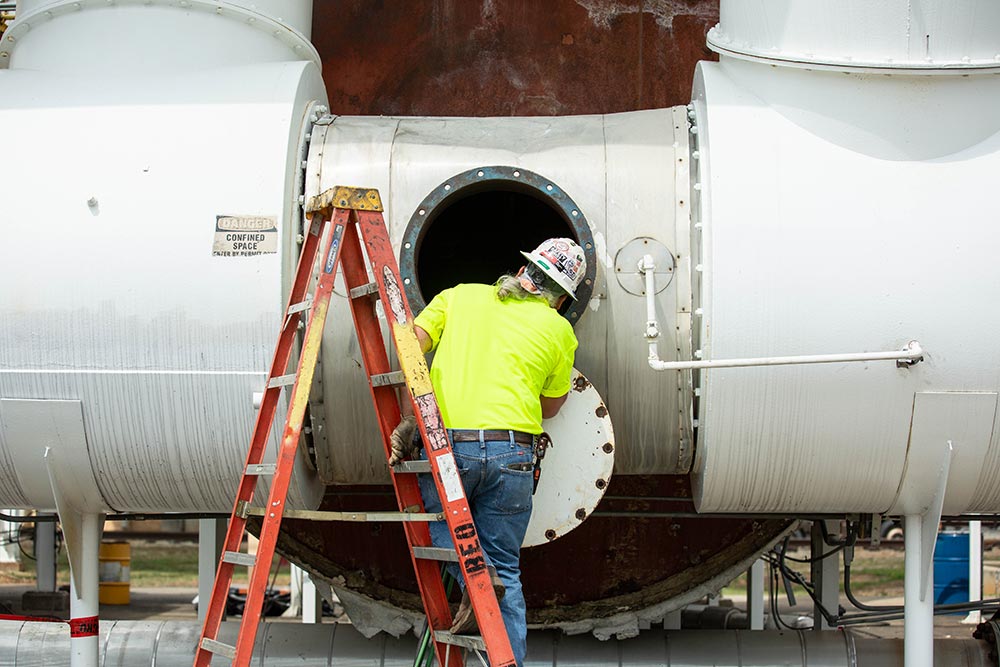
Mechanical – Installing, repairing, testing, and replacing process pipes, machinery, equipment, and industrial ventilation.
Industrial Construction – Constructing and repairing dike walls, sumps, pits, trench drains, walkways, and machine foundations.
Industrial systems can be complex, requiring specialized knowledge for proper maintenance. JDI’s team of maintenance staff bring this expertise to the table, equipped with trained technicians skilled in various aspects of industrial maintenance.
Preventive Maintenance Strategies
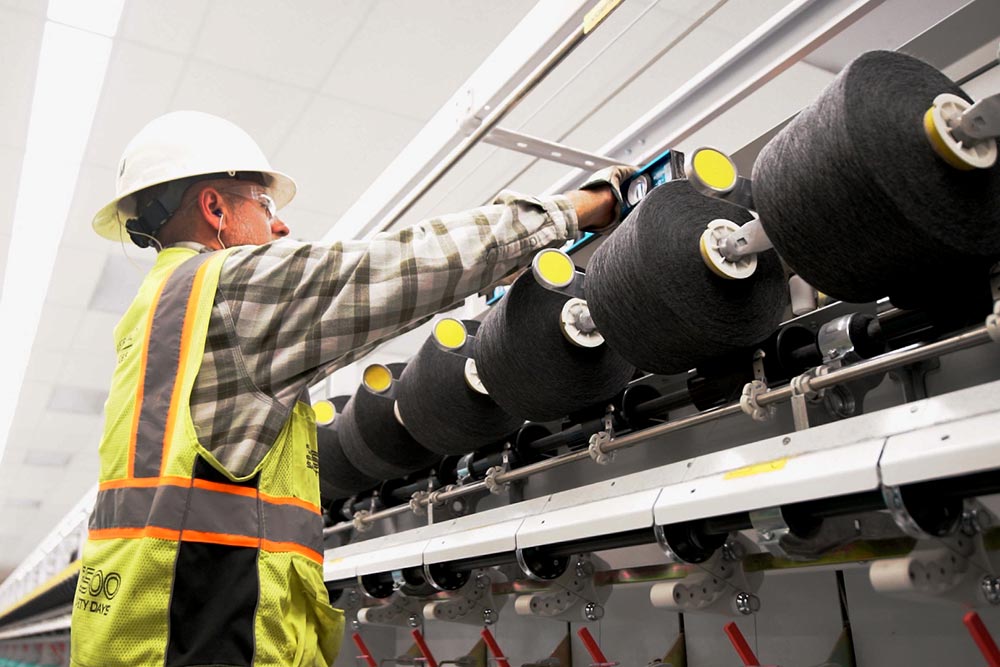
Maintenance is crucial for maintaining machine health. Industrial contractors create maintenance schedules that identify and address potential issues early, before they become critical. This proactive approach helps reduce costly repairs and to extend equipment life.
Industrial maintenance falls into three key approaches: reactive maintenance, time-based maintenance, and preventive maintenance. Let’s go over these strategies in depth.
Reactive Maintenance
This is considered an emergency. Reactive maintenance occurs when a system is already slowing down, showing signs of failure, or has stopped operating entirely and requires urgent repair or replacement. JDI responds quickly to industrial mechanical and electrical issues.
If you’re having an issue right now, please call us: 864.972.4720.
Common emergencies include:
- Leaking or burst pipes.
- Unusual smoke, sparking, or fire from machinery and equipment.
- Electrical malfunctions/unexplained power outages.
- A fishy/ammonia smell indicates an underlying electrical problem.
- Unusual grinding or creaking noises from machinery, structures, and/or fabrications.
- Long cracks in pipes, fabrications or platforms.
- Environmental hazards.
- OSHA related incidents.
Anything that could cause harm to your employees or your business is considered an emergency and needs some immediate attention.
Time-Based Maintenance
Time-based maintenance follows a set schedule for routine tasks such as changing filters and lights, checking electrical panels, inspecting parts, and repairing wear. The equipment manufacturer’s manual should outline the recommended maintenance timeframe and service intervals.
JDI alleviates your maintenance issues by providing scheduled maintenance services, supplying manpower, and refurbishment services. We’ll change filters, restore parts, pad your workforce, and replace what is needed, so you don’t have to.
Preventive Maintenance
Preventive maintenance uses sensors to monitor asset wear, performance, and operating conditions so teams can spot issues early and prevent disruptions.
JDI works with companies like Tractian to install predictive sensors on your machinery to help create a network that analyzes your machinery for problems. This reduces unnecessary interventions and maximizes equipment uptime.
The Woes of Maintenance
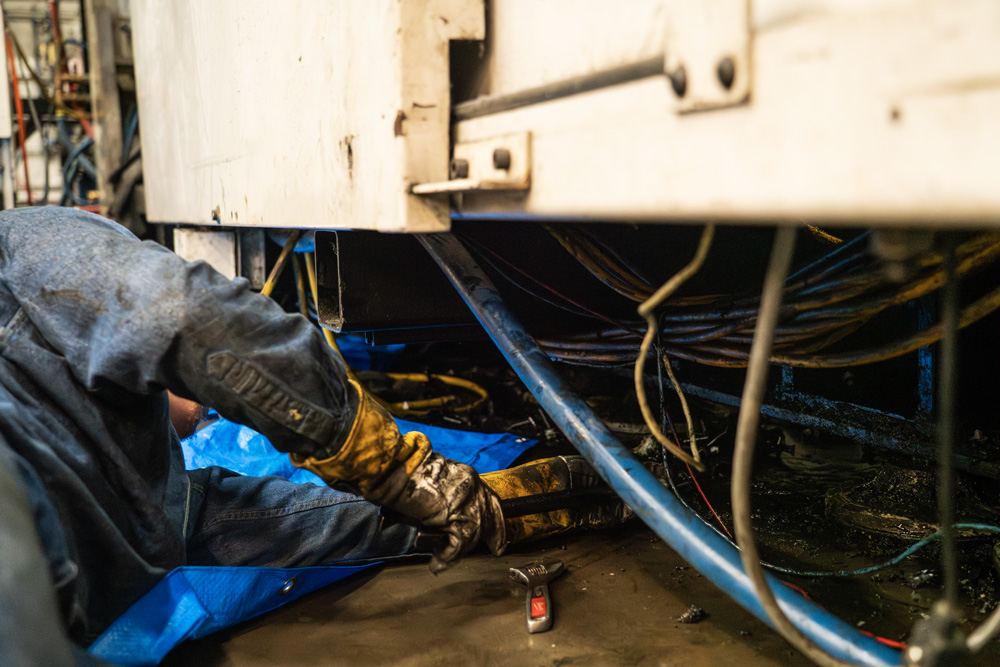
The impact of missing scheduled maintenance varies, but the outcome is always the same. Neglecting your machinery will result in lost production, and costly machinery repairs or replacements will inevitably occur at the worst possible times.
Here are some of the most common causes that can begin an engineer’s 5 whys system.
Common Causes of Getting Off-Track:
• Age.
• Wear.
• Excessive use.
• Human error.
• Incorrect installation.
• Lack of manpower.
• Lack of preventive maintenance.
JDI helps you regain lost time with skilled industrial maintenance technicians. When a maintenance plan is in place, operations and facility managers have more flexibility to make informed decisions before production is affected.
Mechanical & Electrical Maintenance Services
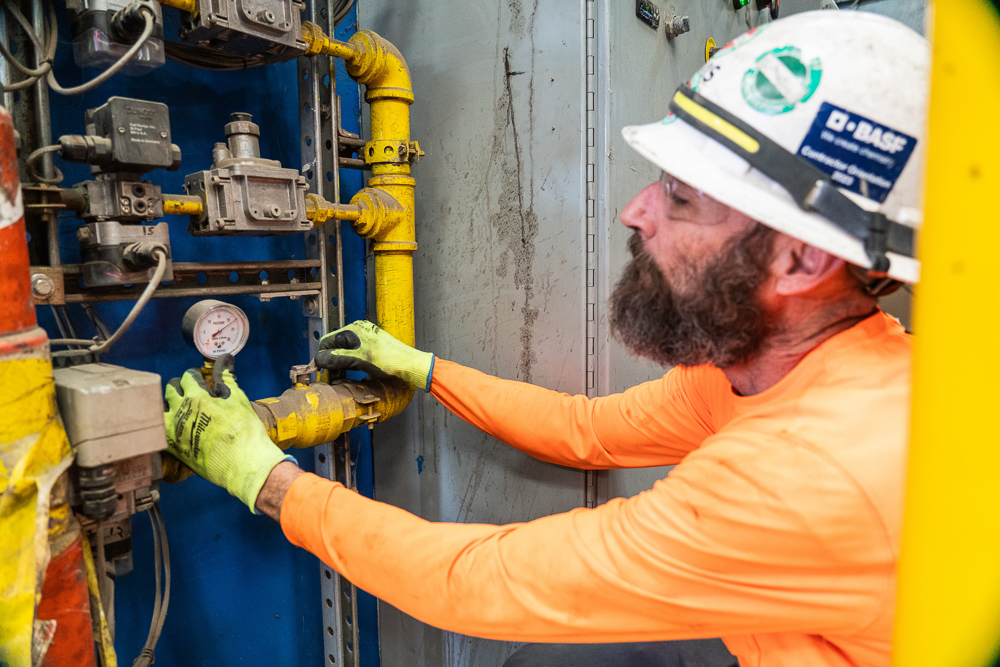
Preventive mechanical maintenance includes restorative tasks that help keep machinery and equipment operating up to industry standards.
Common Mechanical Procedures Include:
• Inspecting and updating equipment.
• Checking belts, chains, and fluid levels visually and by sound.
• Removing dust, metal shavings, and debris.
• Applying oil and grease to rotating parts, gears, and bearings.
• Safety inspections.
• Environmental inspections.
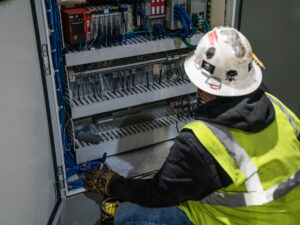
On the other hand, preventive electrical maintenance includes restorative tasks that help keep panels, cables, and electrical components operating safely and reliably.
Common Electrical Procedures Include:
- Cleaning dust from electrical panels.
- Maintaining cables and related components.
- Switchgear maintenance.
- Replacing lights.
- Performing thermal readings to identify hot spots.
- Verifying cable readings.
JDI resolves industrial maintenance issues quickly and efficiently with expert mechanical and electrical technicians. Each maintenance tech we assign to you is a skilled tradesman so minimal training is required.
Long-Term Cost Savings
Regular maintenance helps businesses control long-term costs. By partnering with experienced contractors for ongoing upkeep, facilities can reduce unexpected repairs, extend equipment life, gain access to more manpower, and plan maintenance spending more effectively.
Industrial contractors, such as JDI, have dedicated teams to support small, medium, and large facilities with industrial maintenance. It takes time to hire and train specialized labor. JDI makes it easy. We provide hard-to-find skilled workers, respond quickly to emergencies, work within tight turnaround schedules, and offer competitive pricing to get the job done right the first time.
Adherence to Regulations
Industrial maintenance contractors help businesses stay compliant with current regulations by ensuring operations meet required legal and safety standards. We stay up to date on regulatory changes, so you don’t have to.
JDI’s industrial electricians are trained and certified to meet the highest industry standards. Our team is Lockout/Tagout (LOTO) trained, Arc Flash certified, FOA CFOS/S certified for fiber optic splicing, and fully compliant with the National Electrical Code (NEC). We also provide FOA CFOS/T fiber optic testing performed by an FOA CFOT®-certified fiber optic technician.
Our mechanical technicians are compliant with ASME B31.1 and B31.3 standards. JDI is licensed in both mechanical and electrical subclasses. These two subclasses allow us to deliver a wide range of industrial maintenance services with confidence and precision.
The Value of Flexibility and Scalability
Our industrial maintenance contractors offer unmatched flexibility. We adapt our services to meet changing business needs efficiently. This adaptability is crucial during peak operational periods or production shifts.
Scalability is another key advantage. Contractors can scale their resources up or down based on demand. This ensures that businesses only pay for the services they need.
JDI’s scalability supports cost efficiency and operational effectiveness; your company can focus on necessities without worrying about maintenance workload.
Selecting the Right Industrial Maintenance Contractor
Choosing the right industrial maintenance contractor starts with understanding your facility’s needs. By defining your maintenance requirements, you’ll be able to find the perfect industrial maintenance contractor with the services, experience, and resources needed to support your operations effectively.
First, evaluate your potential contractors’ capabilities and service offerings. Make sure to check out websites, reviews, and project profiles for valuable resources.
Next, find a business that aligns with your safety and values: time, procedures, and operational standards. JDI takes the time upfront to understand your business, so alignment confusion doesn’t happen down the line. Nobody wants a 3-day job to turn into a month-long one.
Finally, check to see if your industrial contractor provides the services you need; this could range from routine maintenance to industrial repair services.
Choosing the right industrial maintenance contractor starts with a clear understanding of your facility’s needs. By defining your maintenance requirements upfront, you can focus on contractors with the services, experience, and resources needed to support your operations effectively.
Conclusion: The Strategic Advantage of Maintenance Contractors
Equipment failure accounts for 80% of all unplanned downtime in manufacturing. Among the surveyed sectors, the automotive industry faces the most severe financial repercussions from downtime. Every unproductive hour now costs automotive manufacturers a staggering $2.3 million.
This figure represents a twofold increase from 2019, underscoring the escalating complexity of modern automotive manufacturing processes. When production lines halt or furnaces go on standby, the financial drain is immediate and devastating.
Now downtime isn’t necessarily a bad thing — production can be paused for routine equipment maintenance, shift changes, training days, or non-business hours. Don’t let it go unplanned, act and schedule today. Let JDI handle your industrial maintenance needs. Your Project. Our Expertise. Proven Results.