In the world of industrial construction and maintenance, mechanical contractors play a pivotal role. They are the professionals responsible for the design, installation, and upkeep of a facility’s operations and systems.
But what exactly is a mechanical contractor? And what do they do that sets them apart from other types of contractors within an industrial environment?
Mechanical contractors focus on the mechanical systems that keep facilities running. From electrical systems and industrial piping to industrial construction and machinery, these professionals help power modern infrastructure.
In this article, we’ll explore what mechanical contractors do, the services they provide, why they are essential in construction and industrial operations, and what the future of the mechanical contracting industry looks like.
Core Responsibilities of an Industrial Mechanical Contractor
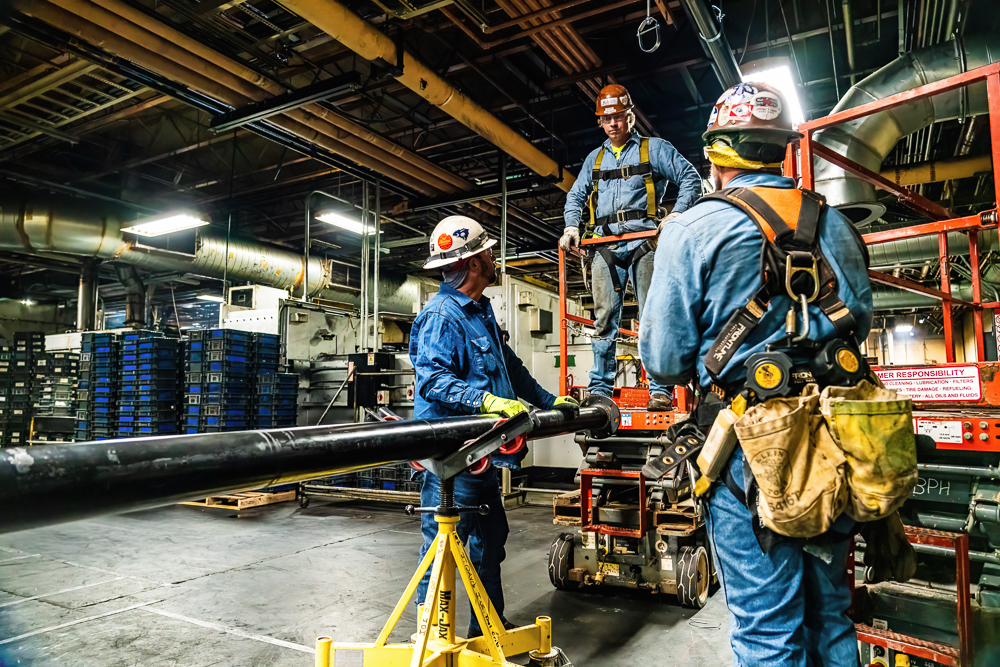
Mechanical contractors are responsible for designing, installing, repairing, and maintaining systems within industrial environments. They work closely with engineers, project managers, architects, and facility owners to complete projects.
These professionals manage everything from project planning and equipment installation to system testing and ongoing maintenance. They also ensure buildings and facilities operate safely, comfortably, and efficiently. And at JDI, we understand that your mechanical systems are the backbone of your industrial performance.
The Scope of Work for Mechanical Contractors
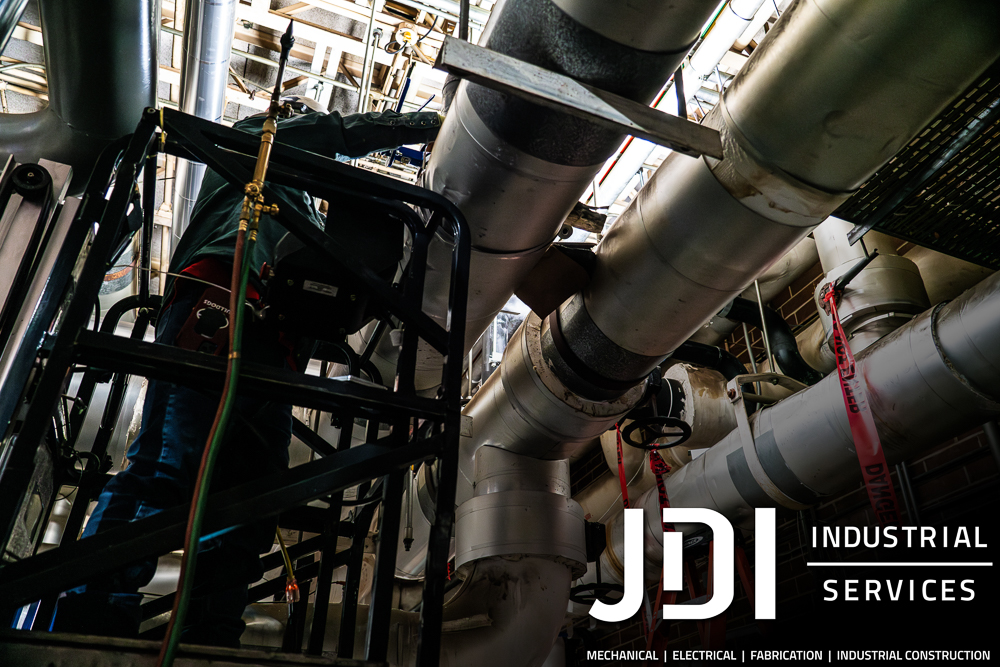
Mechanical contractors provide a wide range of services. They are crucial to many job sites and install, improve, and repair complex systems, usually in a way to enhance efficiency. For JDI Industrial Services, these specializations encompass most of what an industrial site requires.
JDI’s Specializations Include:
- Custom and industry standard steel fabrication design services.
- System piping design, process piping, thermoplastic piping, and pipe prefabrication services.
- Industrial ventilation systems and air supply lines.
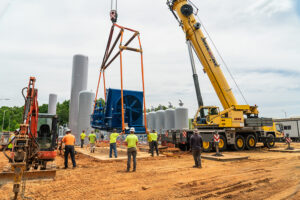
- Rigging and machinery installation.
- Structural support, design, and reinforcement for industrial construction, including walls, foundations, pits, sumps, and trenches.
- Industrial supplemental maintenance, preventative maintenance, and streamlining mechanical processes.
- Electrical preventive maintenance, troubleshooting, and repair solutions.
- Multi-trade management for industrial and mechanical turnkey projects.
As one can see, mechanical contractors play quite an important role in any project from start to finish. A role so important demands a company with proven experience, and JDI has been in the field for over 29 years.
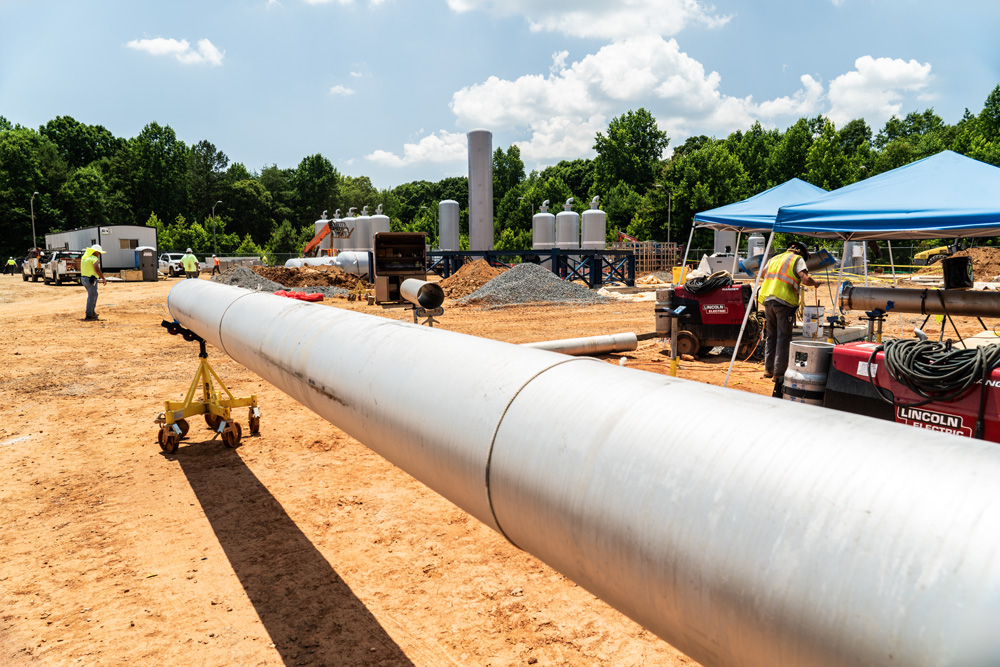
Services Offered by Industrial Mechanical Contractors
What services are usually offered by mechanical contractors? Well, that depends on many factors and who you’re asking. At JDI we offer the following services:
- Steel Fabrication
Creating steel structures from raw components such as plates, beams, and bars, to be used in construction or assembly.
- Pipe Design
Analyzing, surveying, and designing pipes to handle load, stress, pressure, and limitations in any facility.
- Process Piping
Fabricating and installing specialized piping systems that safely manage fluid flow in industrial processes, including manufacturing, chemical production, and energy operations.
- Chiller Systems
Installing chilled water systems useful for large-scale cooling for industrial facilities and their processes.
- Millwright & Machine Rigging
Preparing, securing, lifting, and moving heavy or sensitive industrial equipment such as, conveyors, production lines, chillers, presses, pumps, CNC machines, injection molders, motors, and more.
- Industrial Ventilation
Installing ventilation systems to regulate and maintain safe air quality in industrial environments.
- Industrial Electrical Systems
Inspecting, serving, repairing, and troubleshooting on machinery, equipment, utility services, and wires to prevent breakdowns, reduce downtime, and maintain optimal performance.
- Industrial Construction
Building and supporting critical facility infrastructure, including foundations, dike walls, precision wall cutting and boring, sumps, pits, trench drains, and industrial walkways.
Our team specializes in complex industrial mechanical systems designed for performance, safety, and long-term reliability. From process piping to steel fabrication, and chiller systems to heavy equipment rigging, JDI delivers customized solutions built to meet the heavy-duty demands of industrial and commercial environments.
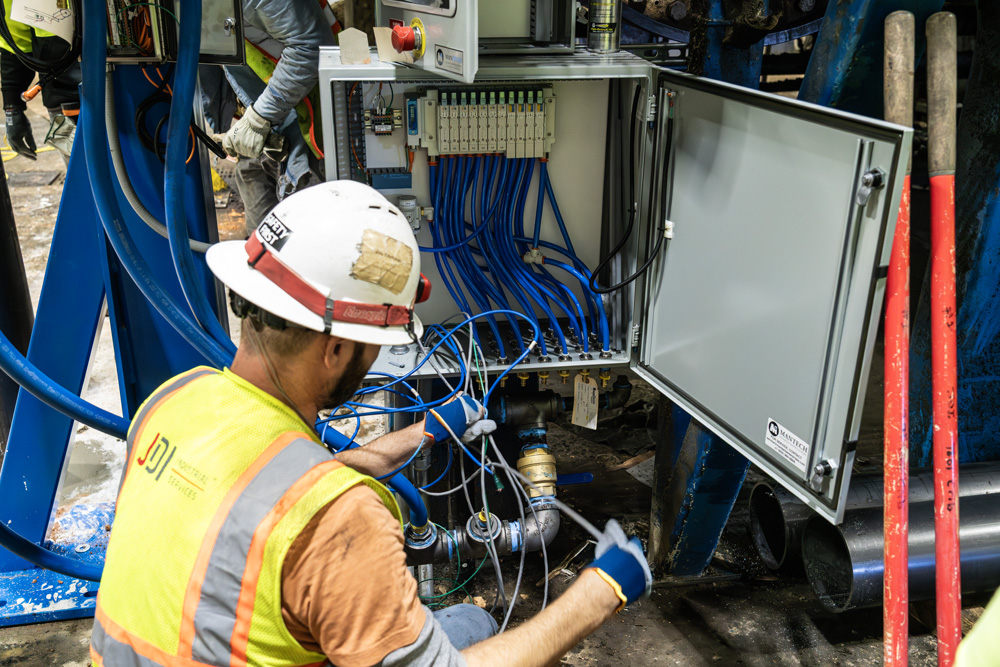
Qualifications and Skills of a Mechanical Contractor
Becoming a mechanical contractor involves a combination of education and practical experience. A strong foundation in mechanical engineering is often essential.
Many contractors also pursue specific trade certifications. These certifications demonstrate specialized knowledge and adherence to industry standards.
Skills in project management are crucial for mechanical work. They must coordinate complex projects efficiently and within budget and timeline constraints.
Strong problem-solving abilities are key. Mechanical staff must address unexpected issues swiftly to keep projects on track. Additionally, effective communication skills are vital for collaborating with other professionals and clients, ensuring smooth project execution from start to finish.
We’ve written an entire article about the best practices that a mechanical contractor like JDI should provide, here.
The Importance of Mechanical Contractors in Construction
Mechanical contractors play a critical role in the construction industry. They ensure the seamless integration of mechanical systems within buildings.
Their expertise extends beyond installation. Our contractors at JDI are pivotal in maintaining and upgrading systems to ensure continuous efficiency.
They contribute significantly to the functionality and safety of structures. This impact is felt in both new constructions and retrofit projects. They also need to be able to connect with the right supplier network to bring affordable and quality parts to their clients.
Their involvement in energy management projects is increasingly vital. Additionally, they ensure buildings and processes meet modern energy standards and sustainability goals.
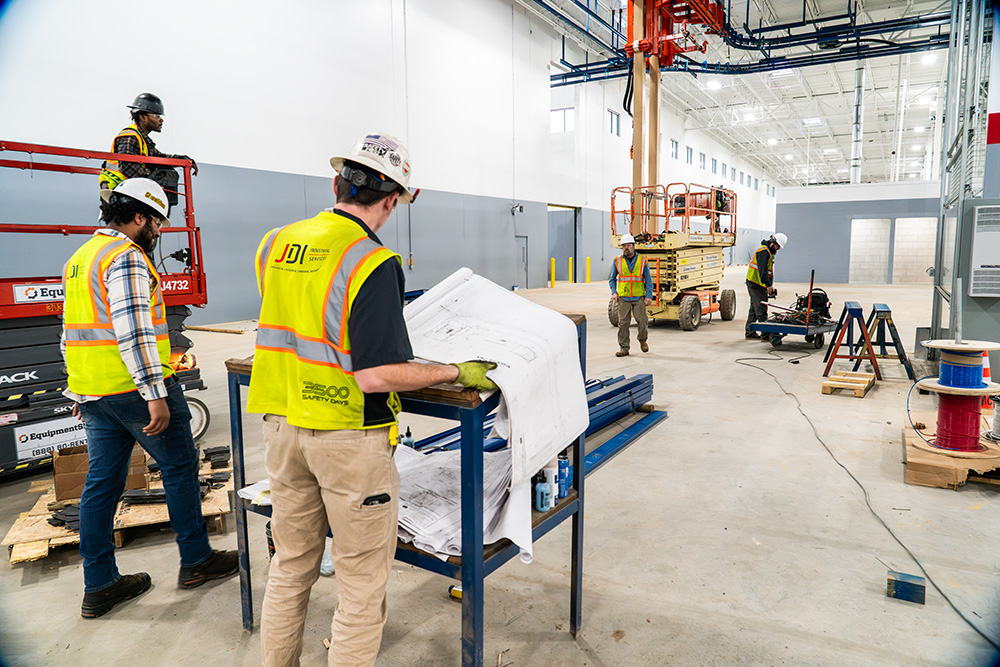
Selecting a Reliable Mechanical Contractor: Tips and Considerations
So, how do you choose a reliable mechanical contractor? Choosing the right contractor is one of the most important decisions you’ll make for your project. We’re going to provide some helpful tips below.
Look for a contractor with proven experience handling projects like yours and expertise in the systems your facility requires. Always verify that your contractor is properly licensed and insured to protect your project and reduce liability risks. Don’t base your project on one conversation; seek references whenever possible.
JDI holds a mechanical license with subclasses in process piping and electrical, and provides services across South Carolina, North Carolina, and Georgia. We also can take on projects at an unlimited value. In addition to verifying licensure, seek out multiple resources to vet your contractor, such as client testimonials, project portfolios, and online reviews. These three things will provide a clearer picture of a contractor’s reliability and craftsmanship.
Clear communication is also key; a successful project hinges on scheduling and proactive coordination throughout every phase of construction or repair. Furthermore, check public records for safety compliance. A good contractor takes care of their clients by preventing safety and compliance issues within their own company first.
At JDI Industrial Services, we are committed to providing reliable mechanical solutions backed by clear communication, dependable workmanship, strong safety standards, and quality service our clients can count on.
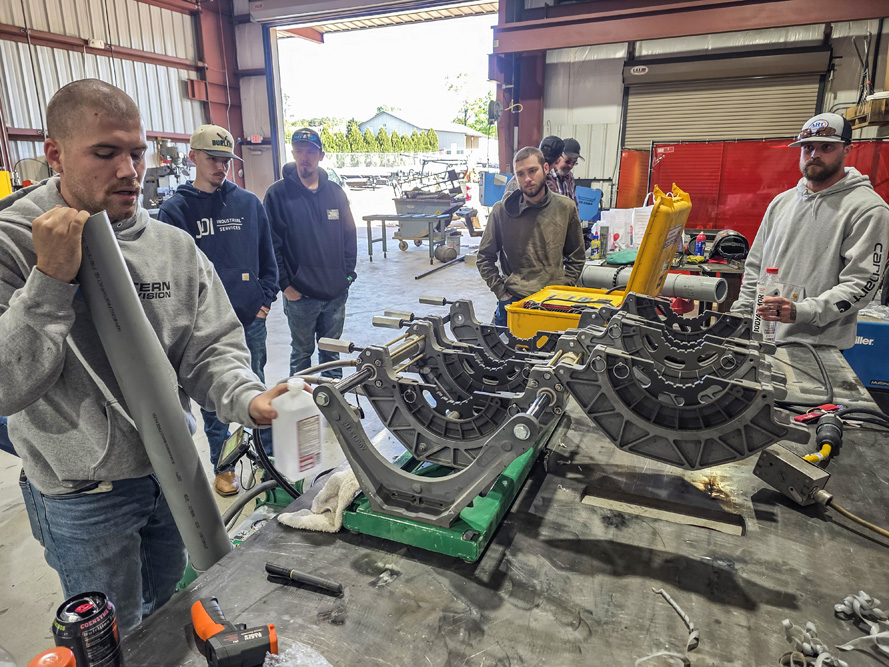
The Future of Mechanical Contracting
The mechanical industry requires continuous innovation and adaptability to remain sustainable. As technology and modern practices advance, mechanical contracting continues to evolve and reshape every industry it supports. And as times evolve, so do industry standards. More facilities are being built to reduce harm to the environment as builders come up with creative energy-efficient solutions to put less pressure on the building’s life cycle. To reduce project cost and time, more modular and steel prefab structures are being constructed off-site and delivered instead.
Automation and advanced technologies are emerging to improve system efficiency, shorten time spent on a job, and enhance facility performance. Artificial intelligence and predictive analytics are beginning to play a larger role in improving operational efficiency beyond what is humanly possible.
As industries continue to modernize, experienced mechanical contractors, like JDI, will play an even greater role in supporting safe, efficient, and sustainable operations to clientele.
Conclusion
Mechanical contractors are essential to the success of commercial and industrial manufacturing, and facility operations. Their expertise ensures critical systems are installed properly, maintained efficiently, and optimized for long-term performance.
From process piping to machine rigging and industrial maintenance to steel fabrication, these professionals help businesses operate safely, efficiently, and reliably in demanding environments.
Our experienced team at JDI is ready to support projects of every size and complexity. We are committed to delivering high-quality mechanical contracting solutions tailored to the needs of our industrial and commercial clients.
If you’re ready to talk to us about your project, contact us today.