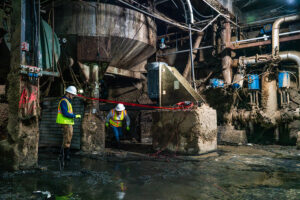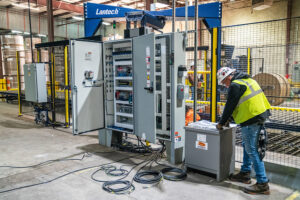
Traditionally, piping has been limited to either PVC, CPVC, carbon, or very expensive materials such as stainless steel. PVC is typically great for moving potable water or waste, but can’t handle much air pressure or weight. Conversely, carbon and stainless are more durable but also much more expensive and time consuming.
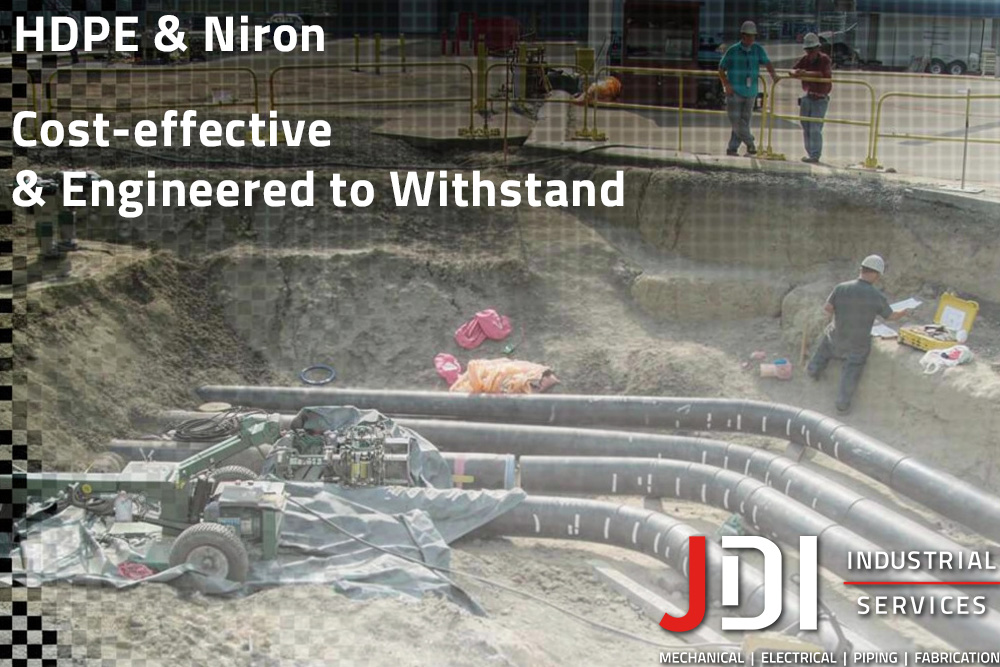
Clearly, a gap existed for years that kept affordability from meeting deliverability for a variety of industrial fluid applications. Niron and HDPE piping both exist to fulfill the demands of a pipe material that can withstand pressures, and be able to transport and protect fluids/gases.
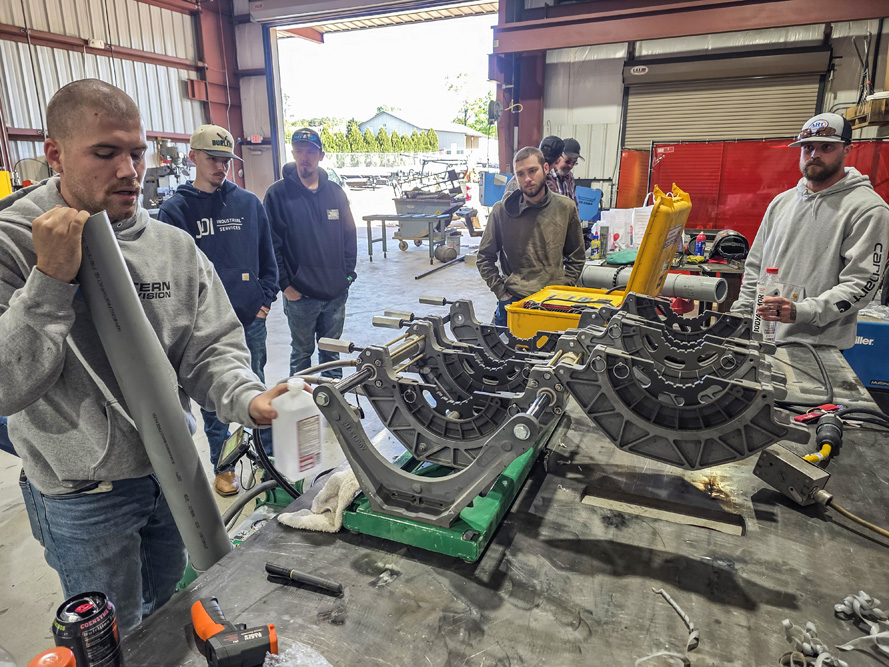
But how do you join the pipes together? Do these materials require specialized welding? Yes to both of those questions, and more. In fact, JDI Industrial Services recently did a training class to sharpen our team’s prowess installing these types of piping.
Let’s explore further into this article about how to work with each pipe, what they are rated for, and how they can be applied to your project.
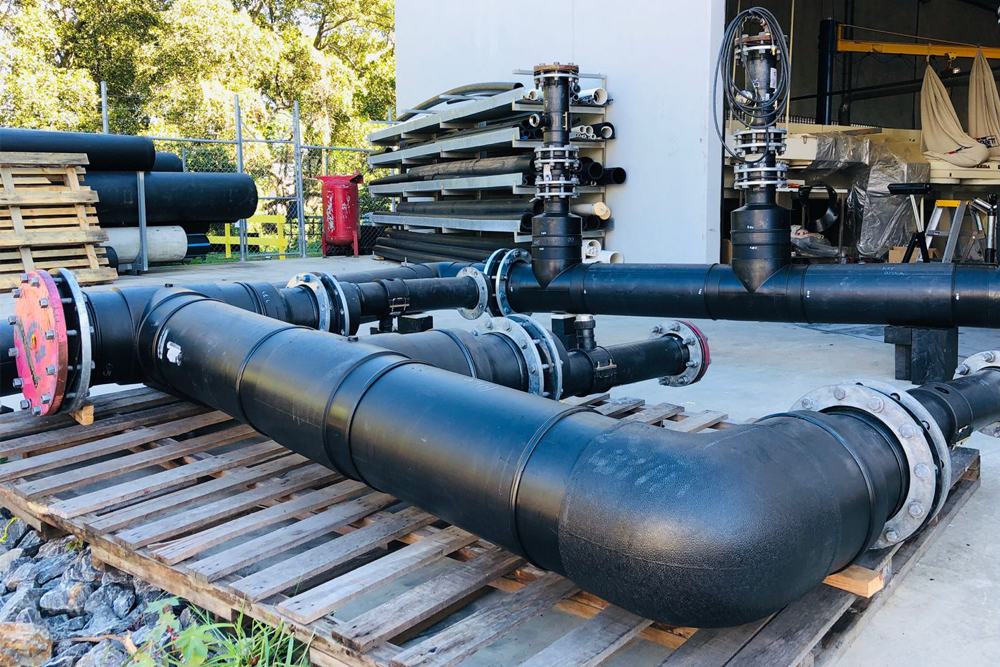
Butt Fusion Welding Process
The technique necessary for joining Niron and HDPE piping together is very simple. Heat fusion, butt welding or most commonly – butt fusion, is the act of joining two pieces of thermoplastic pipe. When performed correctly, the strength of the permanent, monolithic joint is equal to or greater than that of the pipe itself.
Process Details
The first step is to select a proper butt fusion welding machine, like the ones that JDI use from McElroy in the field. Secondly, you then prepare and clean your pipe, preferably with 91% isopropyl alcohol. This enables the third step of alignment and clamping.
The fourth step to joining these types of pipes is the facing process. When you are operating a McElroy system, you will select the machine’s facing phase to begin cutting the pipes to have a smooth face. The face needs to be perfectly flat to join properly, and when complete should have produced 1-2 ribbons of material from the process.
Next, is the heating phase. Typically your plate will be between 400 to 450 degrees. This process requires that you set the appropriate pressure for placing both pipes against the plate. Once heated for the required heating period, you then open the machine, and finally, remove the plate.
Quickly, JDI’s crews join the pipes together to fuse at the required pressure, and allow the pipes to set. Much like cooking, this process is about time, temperature, and holding to ensure the pipes join properly. Upon inspection, this part of the process requires making sure that a double-bead has formed from the fusion process. These beads on a 3″ pipe will each be roughly the size of a physical quarter.
Lastly, the cooling process has taken place, and you now have a completely fused pipe to work with.
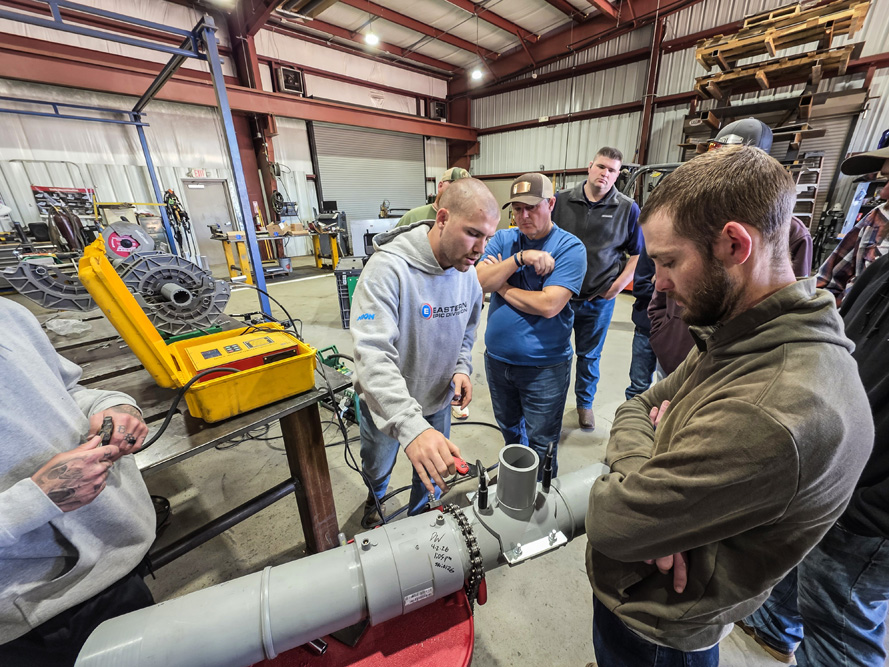
Electrofusion Welding Process
Electrofusion welding is a form of resistive implant welding used to join pipes. A fitting with implanted metal coils is placed around two ends of pipes to be joined, and current is passed through the coils. Resistive heating of the coils melts small amounts of the pipe and fitting, and upon solidification, a joint is made.
Because of the consistency of the electrofusion welding process in creating strong joints, it is commonly in use for the construction and repair of gas-carrying pipelines. Nupi Americas is the creator of the electrofusion machine that we use at JDI Industrial, and they set the standard for much of this type of work.
Process Details
To begin the process, you must prepare the pipe properly. First, cut the pipes at a right angle, prep the pipe with a scraper, then clean the surface with isopropyl alcohol. Following this, mark the insertion depth on your pipe for the fitting you will be using.
Fitting the pipe together is your next step. Once the two pipes are inserted into the fitting, you connect the welding cables to the fitting connectors. Scan the barcode with your electrofusion machines scanner, and then document your time, date, and welder signature on the coupling.
Finally, the heating and setting process will vary, but for a 3″ pipe of Niron, you can expect the electrofusion process to take roughly eight and a half minutes. Thereafter, it is ready to be used for your process.
 Applicability to Industrial Projects
Mechanical contractors like JDI Industrial need to be able to provide a solution that can bring value. For example, HDPE has 30% higher flow than steel, enabling smaller diameter for the same volume to save costs.
Our clients are finding themselves more capable of getting their budgetary needs met and their performance goals in alignment.
The following are typical applications we offer:
- Industrial Settings: piping for waste and potable water lines, cooling lines, chemical waste lines, stormwater, and fire protection.
- Data Centers
- Natural Gas Distribution
- Landfills
- Water Treatment Facilities
- Power Generation
- Mining
By installing your Niron and HDPE piping, we help your business improve system reliability.
Conclusion: Future Piping for Mechanical Contracting
Like the rest of mechanical contracting, process piping is also evolving with industry demands and advancements. When carbon was more affordable, it made sense to utilize it for just about everything. When PVC came onto the scene, people from top to bottom brushed it aside until it proved its uses.
Today, Niron and HDPE are within that same category. Both are new materials, shortly battle-tested, and yet engineers, project managers, and maintenance leads are seeing the benefits.
Continual innovation development is crucial to JDI Industrial Services. By keeping up with technological advancements and regulations, we can provide the cutting-edge solutions and installations manufacturers and facilities need. This commitment ensures our essential role in modern infrastructure and mechanical construction projects. As you continue to grow and build, contact JDI to commit to a partnership with you, today.